The Investment Engine: April 2026
Mechanical Resilience: Navigating the Great Volatility Pivot
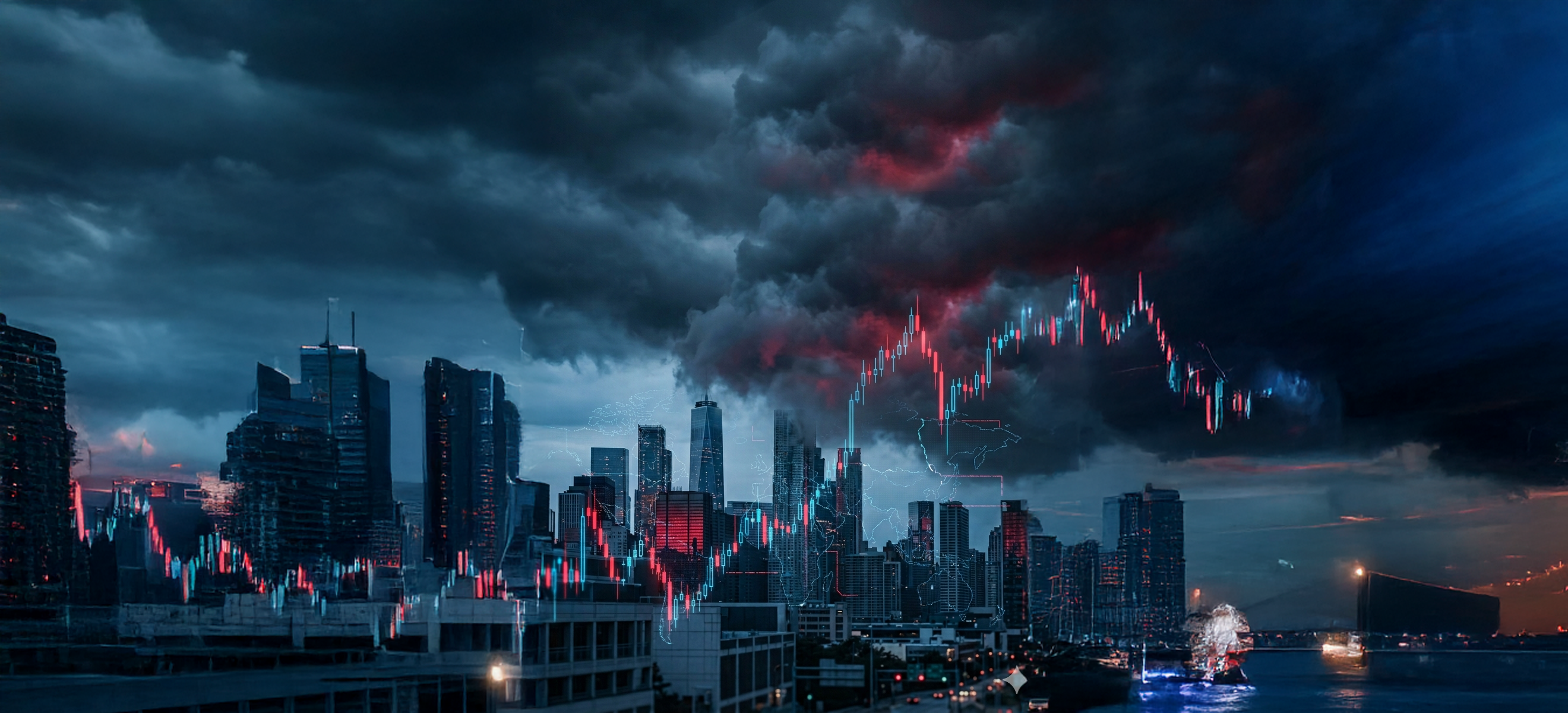
In the world of disciplined portfolio management, we often describe the “Investment Engine” as a multi-stage machine. Each component-be it Global Growth, Domestic Income, or Real Assets-is designed to perform a specific function under varying atmospheric conditions. Over the last six weeks, the “atmospheric conditions” of the global market have shifted from the clear skies of early February to a dense, geopolitical fog.
However, a well-engineered engine does not stall when the weather changes; it adjusts its fuel-to-air ratio. As we move through April 2026, your portfolio is undergoing a “Tactical Recalibration.” We are shifting from a focus on broad-based momentum to a more surgical memphasis on Digital Resilience, Computational Dominance, and Infrastructure Stability.
1. The Digital Frontline: Why Cyber and Compute are Decoupling
The most striking mechanical development this month has been the “decoupling” of specific technology sub-sectors from the broader market. When the conflict in the Middle East intensified in March, the instinctive reaction for many “passive” investors was to sell Tech as a whole. Our “Engine,” however, is designed to be more granular.
As the spreadsheet data for this period confirms, while broad indices like the S&P 500 and the Nasdaq wavered, our concentrated positions in AMD (+9.97%), Palo Alto Networks (+8.75%), and CrowdStrike (+7.16%) powered ahead. This wasn’t an accident; it was the result of a specific investment thesis: The Digital Frontline is the new Global Utility.
- Cybersecurity as Non-Discretionary Infrastructure: In previous decades, a geopolitical crisis might lead to a slowdown in corporate spending. In 2026, the opposite is true for cybersecurity. As state-sponsored cyber-warfare becomes a primary tool of modern conflict, companies like Palo Alto (PANW) and CrowdStrike (CRWD) have seen their “Value Proposition” skyrocket. For a global enterprise,protecting their data architecture is now as fundamental as paying the electricity bill. This “sticky” revenue creates a high-conviction floor for these stocks, allowing them to rise even when the broader market is fearful.
- The AMD vs. TSM Divergence: One of the more complex maneuvers in the engine this month was the divergence between AMD and Taiwan Semiconductor (TSM). While TSM remains the world’s most important foundry, its geographic proximity to other geopolitical flashpoints caused a “valuation discount” in March. Conversely, AMD-as a US-based designer of high-efficiency AI chips-captured the “Safe Haven” compute trade. AMD is currently winning the “Efficiency Race,” providing the high-performance chips required to run the next generation of AI models at a lower energy cost-a critical factor with oil prices hovering at $120.
2. The Defence “Slow Burn”: Managing the Lag Between Billions and Bottom Lines
A frequent point of discussion with clients this month has been the performance of our Defence holdings. There is a perceived paradox: billions of dollars in weaponry are being deployed, yet names like Northrop Grumman (NOC) and RTX (Raytheon) have shown a “slow burn” or even slight negative performance over the six-week war window.
To understand this, we must look at the “Lead Times” of the Defence Engine. Unlike a software company that can scale a cloud update to a million users in minutes, the traditional Defence sector operates on Long-Cycle Procurement.
- The Contract-to-Revenue Gap: When the US or Australian governments announce a $5 billion commitment to new missile systems or space-based sensors, that money does not instantly appear on a balance sheet. It triggers a multi-year cycle of design, testing, and manufacturing. We are currently in the “Announcement Phase.” The “Earnings Phase” for these companies will likely peak in 2027 and 2028.
- Inflationary Pressures on Hardware: Defence primes are physical manufacturers. Rising energy costs and disruptions to titanium or neon supply chains (key for aerospace and lasers) squeeze profit margins in the short term.
- The Strategic Role: We are not trimming these positions despite the “slow burn.” In fact, we view them as the “Deep Yield” of the portfolio. They provide government-backed, multi-decade revenue certainty that is entirely uncorrelated with the “hype cycles” of Silicon Valley. They are the insurance policy that pays out when the world remains unsettled.
3. Real Assets: The “Essential Nervous System”
While Tech and Defence capture the headlines, the Real Assets component of your portfolio (IFRA-AU and VBLD-AU) has quietly performed its role as the “Stabiliser.”
In an environment where inflation is being driven by energy shocks, the “Essential Nervous System”-power grids, toll roads, and water systems-becomes incredibly valuable. These assets have inflation-linked pricing power built into their regulatory frameworks.
- The AI-Power Nexus: There is a secondary engine at play here: the AI boom. The massive data centres being built by Nvidia, Microsoft, and Amazon require an astronomical amount of electricity. This is driving structural demand for the utility companies and energy infrastructure held within our Real Asset funds. Even if the “War Volatility” subsided tomorrow, the “AI Energy Crisis” would continue to drive the value of these infrastructure plays. This is “Quiet Compounding” at its finest.
4. Currency Engineering: The AUD “Shield and Sword”
One of the most complex gears in the engine this month has been the Australian Dollar (AUD). Typically, in a global crisis, the “Greenback” (USD) surges as a safe haven. However, in 2026, the AUD has shown surprising resilience, often trading higher against the USD due to our status as a major energy and commodity exporter.
For an unhedged international portfolio, a stronger AUD is a “Headwind”-it reduces the value of your US shares when converted back to home. This is why our Dual-Track Currency Strategy is so vital:
- Hedged Holdings (The Shield): Funds like QHAL-AU and HNDQ-AU (Hedged Nasdaq) lock in the currency rate, ensuring that the stellar performance of companies like AMD or Costco isn’t “eaten” by a rising Australian dollar.
- Unhedged Holdings (The Sword): Core exposures like IVV-AU (S&P 500) remain unhedged. This ensures that if the US economy eventually outpaces the rest of the world and the USD regains its “Super-Safe Haven” status, your portfolio will capture that currency gain on the upside.
5. Domestic Strength: The Australian Anchor
Closer to home, the Australian equity allocation has been dominated by the “Bank Surge.” The resilience of the Australian consumer, despite higher rates, has allowed the Big Four banks-led by CBA-to reclaim record levels.
However, we are moving into the “Confession Season” (April trading updates). We are carefully monitoring the “Market Breadth” in Australia. When the index is driven purely by Banks and a handful of Resource giants (BHP/Rio), it can create a false sense of security. Our “Engine” is currently tilted toward Quality (AQLT-AU), favoring Australian companies with low debt and high cash-flow visibility. We want to own the companies that can survive a “Higher-for-Longer” interest rate environment, rather than just chasing the index.
The Bottom Line: Multi-Engine Reliability
The April 2026 update is a reminder that investment returns rarely come from just one place. A well-constructed portfolio doesn’t rely on a single “win”; it relies on multiple components working in harmony:
- Cybersecurity & AI Compute to provide high-velocity growth.
- Infrastructure & Real Assets to provide an inflation-linked floor.
- Defence Primes to provide long-term, government-backed certainty.
- Active Currency Management to protect value in a shifting FX world.
As we navigate the next phase of this cycle, our finger is on the pulse ofthe “Earnings Pivot.” The volatility of the last six weeks has created a “Dislocation”-a gap between the true value of high-quality companies and their current market price. Our engine is primed to close that gap. While the headlines will continue to shift, the structural design of your portfolio ensures it remains positioned to capture opportunity, allowing your wealth to quietly compound in the background while the world finds its new equilibrium.




.png)


.png)